Colours
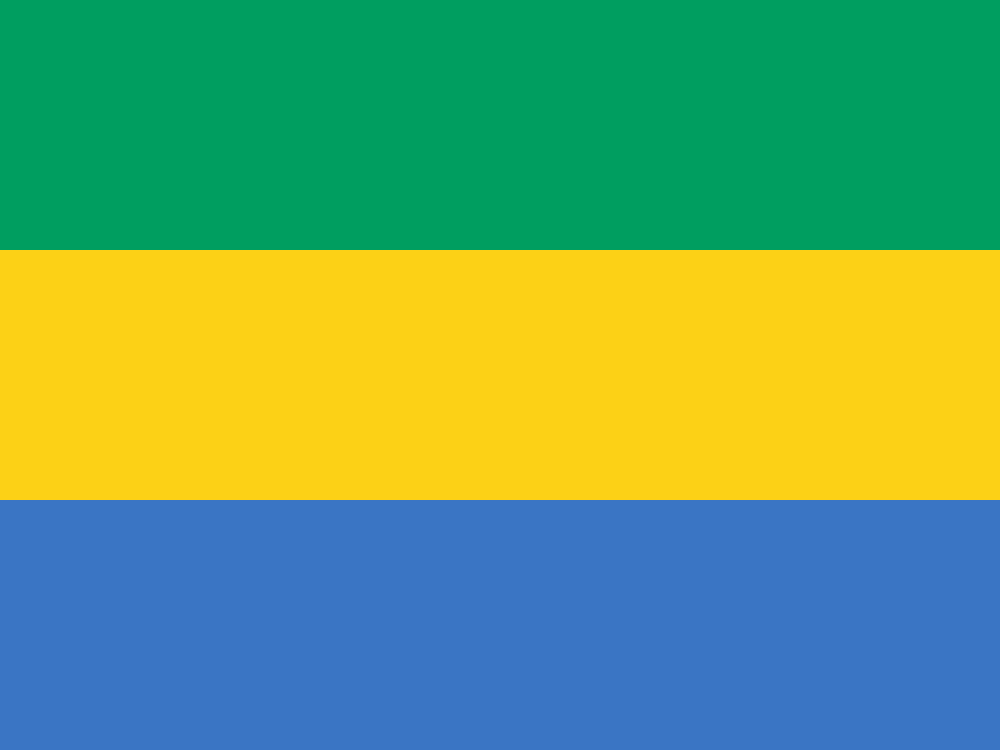
Read from the flag itself, down to the exact shade.
- #009e60
- #3a75c4
- #fcd116
Other flags with blue, green or yellow or all of blue, green and yellow at once.
How it is put together
Measured off the picture, the same way the colours were, not from anybody's description of it.
- 3 horizontal bands
The fly edge changes colour going down, the foot does not, and every change is a straight line right across.
What we know about it
Gabon adopted a flag in 1959 whose centre stripe was narrower than the bands around it, carrying the French Tricolour, the only French autonomous republic to feature that symbolic link with France. On 9 August 1960, a week before independence on 17 August, the Tricolour came off and the yellow stripe was widened to equal the others. Yellow alludes to the sun and to the Equator, which cuts across the country; green is the natural resources and the extensive forested area; blue is the South Atlantic Ocean along the country's coast.
Drafted from Flag of Gabon on Wikipedia, as it read on 2026-08-26, and checked back against it: every date, name and number above appears in the sentences it was written from. Nobody here wrote it by hand.
Its day
The almanac keeps a page per day of the year that something is dated to. This flag is on one of them, with the sentence that says so.
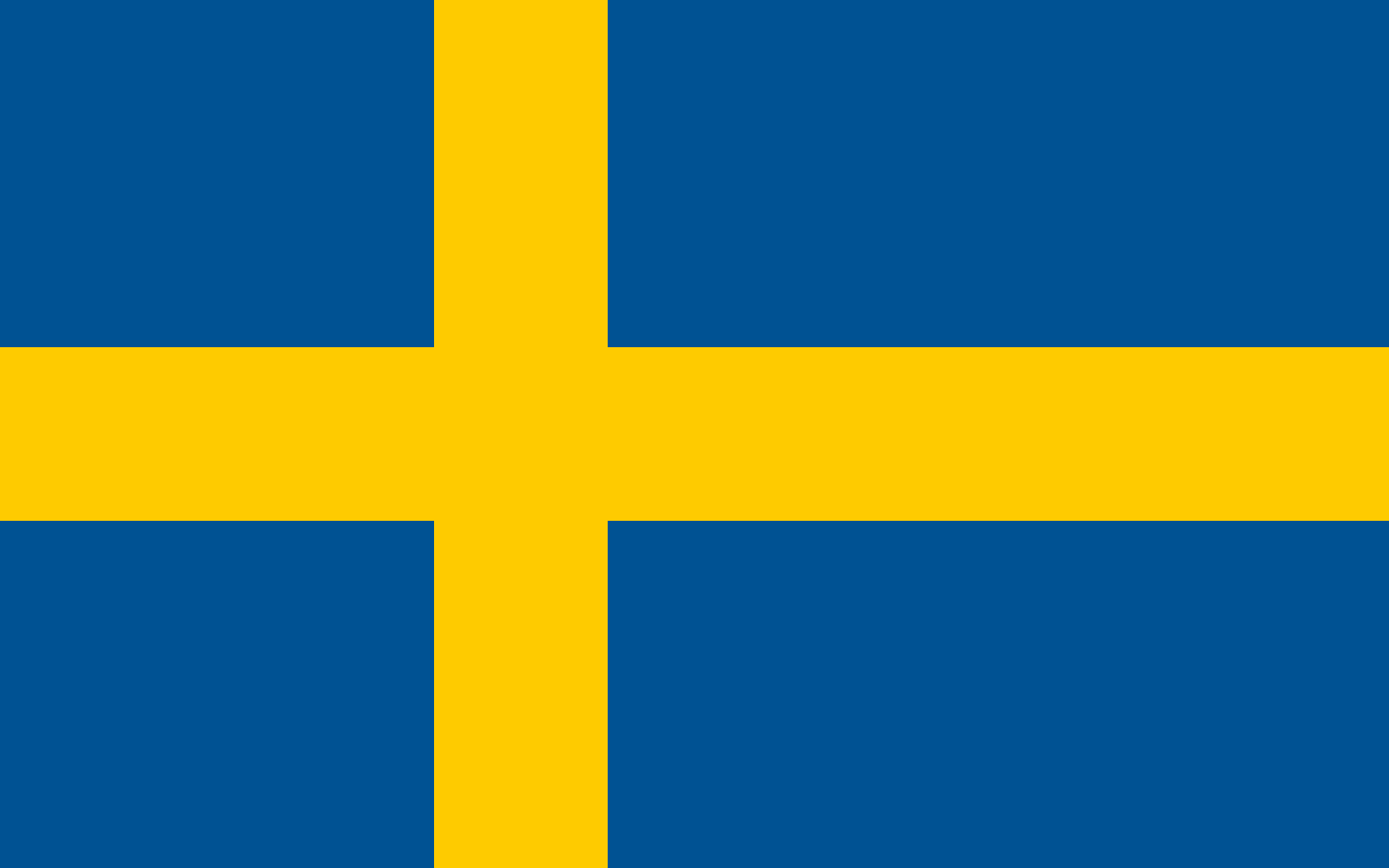
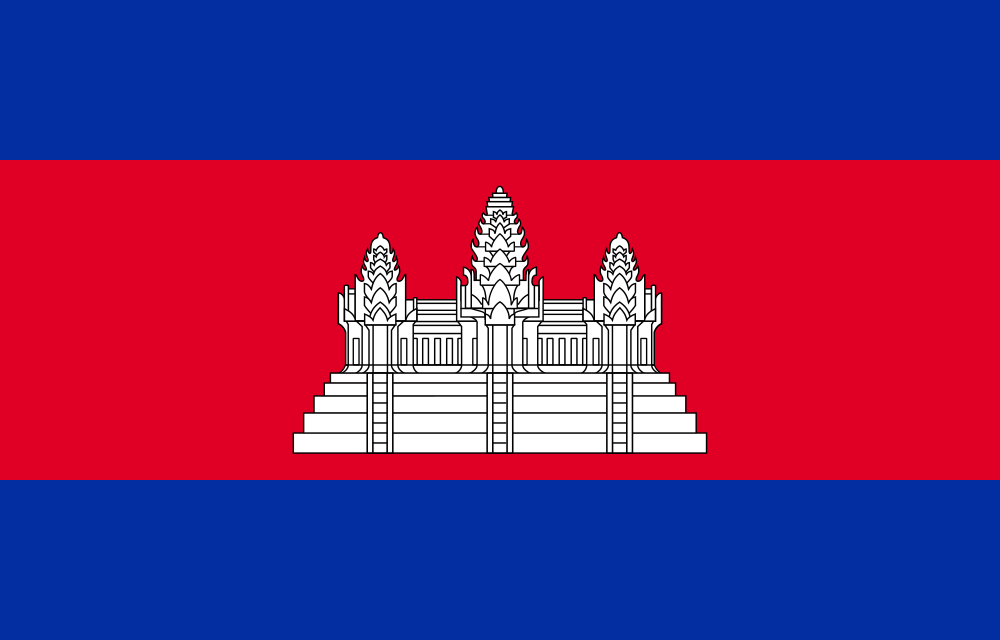
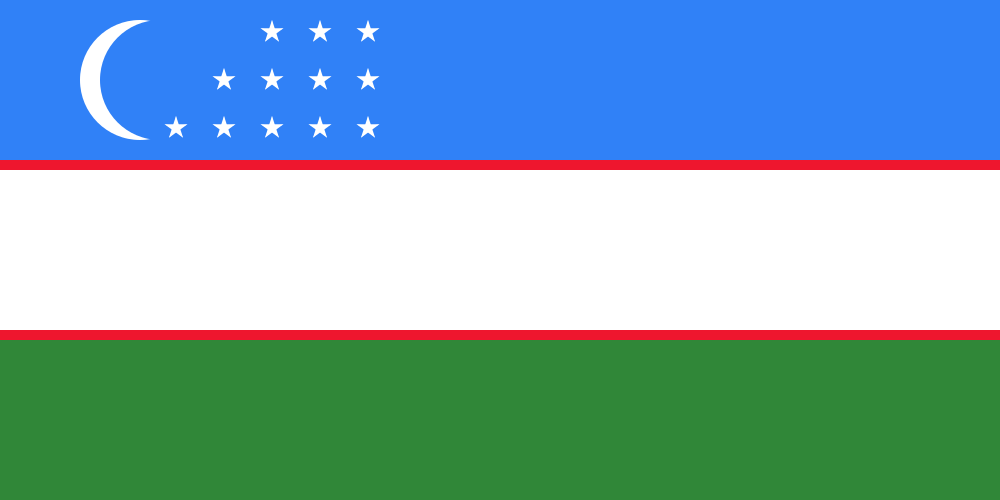
Nearest in the world
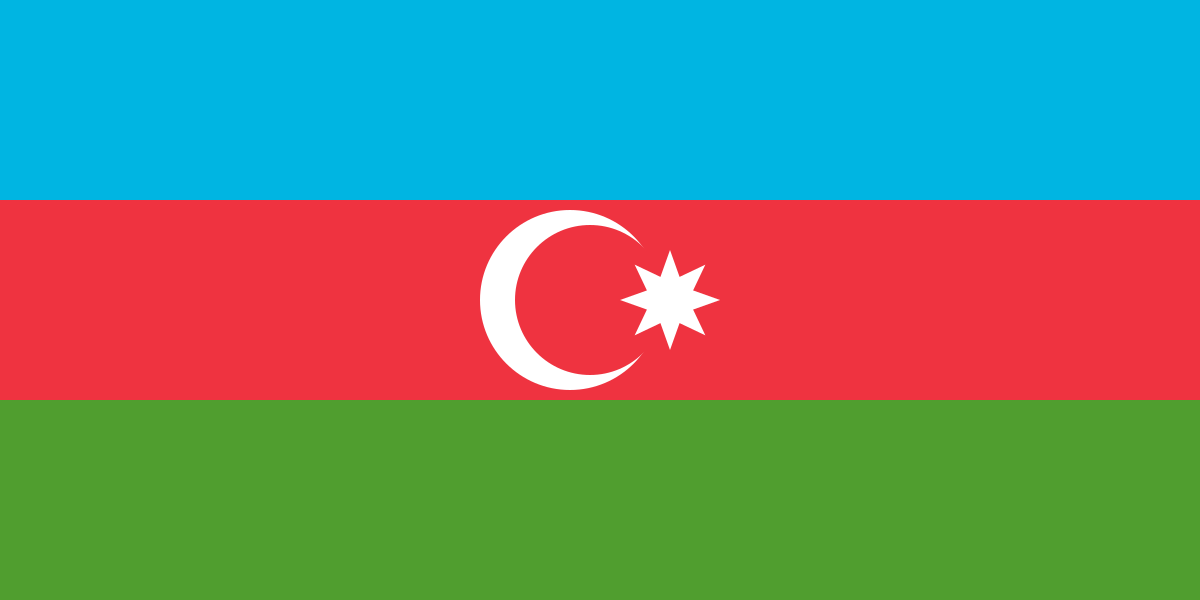
Every flag is compared with every other one, off the pictures themselves. Two copies of one picture score 0; these are the closest to this one. How that is measured.
Quiz yourself
Ten questions, played on the page, no sign-up and nothing kept. Gabon is one of the flags in each of these.
The picture
- Licence
- Public domain
- Drawn at
- 1000 × 750
Credit Léon Augé and Pierre Claver Eyeghe
From Flag of Gabon.svg on Wikimedia Commons.

Take the picture, as a drawing or as an image, with the licence and the credit above attached to it.